First Blood: How Elite Teams Crush Opponent Morale Before the Game Even Gets Started
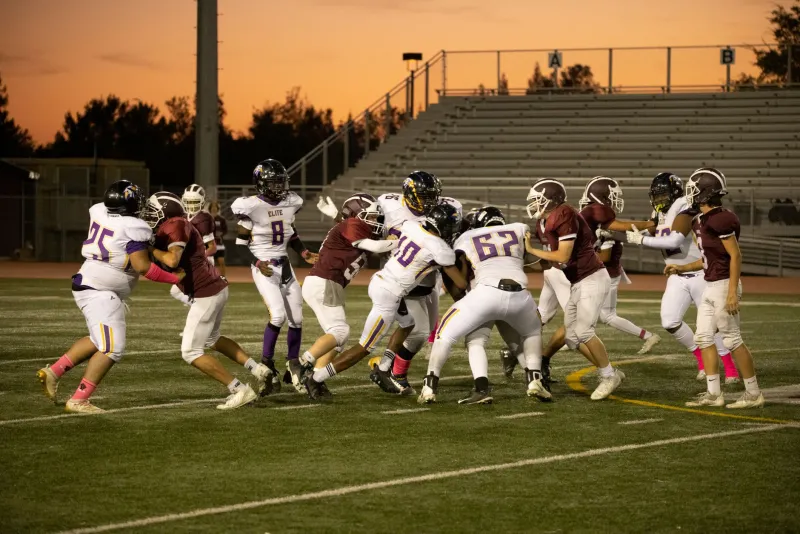
There's a moment in almost every blowout where you can pinpoint the exact instant the losing team stopped believing. It's rarely the final score that breaks them. It's something earlier — a third-and-short stop, a fast-break dunk off a turnover, a punishing run up the gut that gains eight yards like the defense wasn't even there. One play. Sometimes two. And then something shifts.
That shift isn't accidental. For the best teams in American sports, manufacturing that moment is a deliberate, practiced strategy. Welcome to the psychology of the first quarter — where winning teams don't just try to score, they try to smother.
The Mental Game Starts Before the Opening Whistle
Sports psychologists have long studied what's called "competitive anxiety" — the pre-performance stress that athletes experience heading into a game. Every competitor feels it. The question is whether a team can weaponize their opponent's anxiety before it settles into focus.
Elite programs understand that the first few possessions of any game carry disproportionate psychological weight. Research in sport psychology consistently shows that early negative outcomes spike cortisol levels in athletes, impairing decision-making and increasing risk aversion. In plain terms: when a team gets punched in the mouth early, their brains start lying to them. Suddenly the playbook feels too complicated, the opponent looks bigger, and the sideline communication breaks down.
The teams that win championships aren't just physically superior. They're architects of that breakdown.
Tempo as a Weapon: The Kansas City Blueprint
Look at how the Kansas City Chiefs have operated under Andy Reid across multiple Super Bowl runs. Kansas City rarely comes out trying to score on every possession in the first quarter. Instead, they control the clock, manufacture third-down conversions, and methodically drain the energy — and confidence — out of their opponents' defensive units.
The effect is subtle but devastating. By the time the second quarter arrives, the opposing defense has been on the field for extended stretches, their pass rushers are gassed, and their cornerbacks have been picked apart on short routes. Kansas City hasn't necessarily scored a lot. But they've sent a message: You can't stop us. We'll just keep coming.
That message is a momentum thief. It doesn't show up in the box score. It shows up in the fourth quarter when the opponent's eyes go flat.
Defensive Schemes Designed to Confuse, Not Just Stop
Offense gets most of the credit for early-game dominance, but some of the most sophisticated momentum-stealing happens on the defensive side of the ball.
In college football, Georgia under Kirby Smart has become the gold standard for early-game psychological pressure. The Bulldogs regularly deploy multiple defensive fronts and coverage shells in the first two series of a game — not necessarily to generate sacks or turnovers, but to force the opposing quarterback into hesitation. A quarterback who takes an extra half-second to process a coverage shell is a quarterback who's already losing.
Smart has talked openly about the importance of making opponents feel like they're solving a puzzle with the wrong pieces. When a freshman quarterback rolls into Athens and sees four different looks before his second snap, the game slows down for him in the worst possible way. Meanwhile, Georgia's sideline is reading every micro-expression, every hesitation, every hurried throw.
The Bulldogs aren't just playing defense. They're conducting a psychological audit in real time.
The NBA's Fast-Break Mentality: Running Teams Off the Court
In basketball, the momentum theft happens at a much faster pace — which makes it even more brutal.
The Golden State Warriors built a dynasty partly on the concept of the "punch" run: a sequence of possessions in the first or third quarter where they'd rattle off eight to twelve points in under two minutes, completely erasing whatever confidence the opponent had built. Steph Curry's pull-up threes from the logo weren't just highlight plays. They were psychological grenades.
When a team watches Curry drain a thirty-footer off the dribble with a hand in his face, they face a choice: do they start doubling him and leave shooters open, or do they play him straight and watch him do it again? There's no good answer. And the act of not having a good answer — of standing on the court knowing the other team has a weapon you can't neutralize — is corrosive to team confidence in ways that are hard to overstate.
More recent examples follow the same pattern. The Boston Celtics under Joe Mazzulla have leaned into defensive intensity in opening quarters as a way to dictate the emotional tenor of the entire game. Their switching schemes force opponents into uncomfortable isolation situations early, and the resulting turnovers and missed shots compound. By the end of the first quarter, the opponent isn't just down points — they're second-guessing their own offensive system.
Calculated Aggression: When to Show Your Hand
Not every momentum-stealing tactic is about patience. Sometimes the play is to hit first and hit hard.
In college football, Ohio State has made a habit of scripting its first fifteen offensive plays to include at least two or three deep shots down the field — regardless of whether they connect. The reasoning is straightforward: even an incomplete bomb forces the opposing secondary to respect the vertical threat, which opens up everything underneath. But there's a secondary effect that's just as valuable. It tells the other team's defensive backs, on the first series of the game, that they are not safe.
That psychological imprint lasts. Corners who get torched deep in the first quarter play softer for the rest of the afternoon. Safeties cheat back. And suddenly the intermediate routes that Ohio State's receivers run are wide open, because the opponent's brain is still processing that first deep ball.
Calculated aggression isn't recklessness. It's a message delivered with precision timing.
What This Means for the Rest of Us
There's a reason Turn One is where races are won and lost. The opening moments of any competition — the first turn, the first snap, the first possession — set the psychological framework for everything that follows. The teams that understand this don't just show up to play. They show up with a plan to make the other side feel like they've already lost.
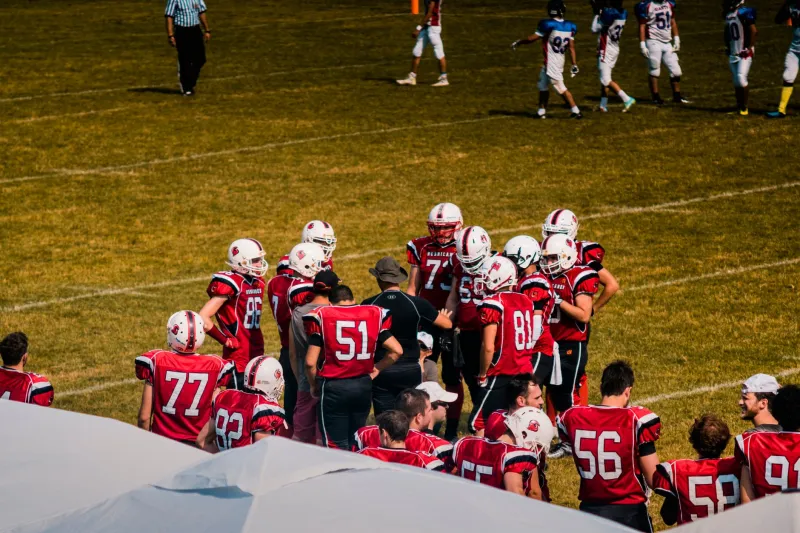
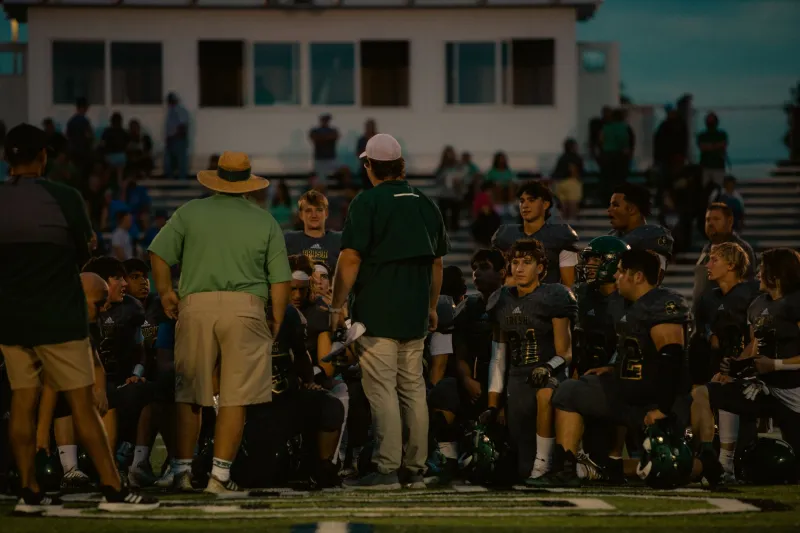
Next time you're watching a game and one team starts pulling away early, don't just look at the score. Watch the body language on the trailing sideline. Watch the quarterback's eyes after a third-down stop. Watch the defensive lineman who stops talking trash after the third consecutive first down.
That's not a football game anymore. That's a team getting its confidence quietly dismantled, one possession at a time.
And somewhere on the winning sideline, somebody scripted that exact outcome before the coin ever hit the ground.