When the Crowd Becomes the Defense: America's Loudest Stadiums, Ranked
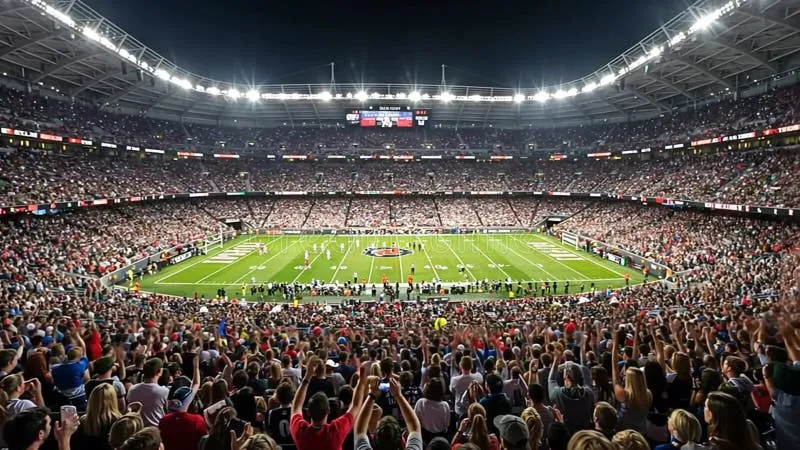
Photo: packed college football stadium crowd at night, via thumbs.dreamstime.com
Every stadium has noise. A handful of stadiums have weapons-grade noise. If you've ever stood on the sideline during a third down at one of these places, you know the difference: it's not atmosphere, it's pressure. Physical, ear-ringing pressure.
5. Ohio Stadium — The Horseshoe
The 'Shoe earns its spot through sheer mass. More than 100,000 people packed into a horseshoe-shaped bowl create a wall of sound that seems to roll in waves. Ohio State's crowd isn't the trickiest in the country, but on a night game against Michigan or Penn State, the decibel readings get silly and the visiting offense gets short-tempered.
4. Tiger Stadium — Baton Rouge
Death Valley at night is less a venue than a weather event. LSU fans show up hours early, tailgate like it's a religious obligation, and then funnel all that energy into one of the loudest sustained roars in sports. Visiting teams have famously burned timeouts on the opening drive because they simply could not hear the play call. A 1988 game-winning drive celebration reportedly registered on a nearby campus seismograph — the legend may outgrow the seismology, but the noise doesn't need help.
3. Autzen Stadium — Eugene
The quietest giant on this list by capacity. Autzen holds barely 54,000, but Oregon's fans are packed so tight into a steep, enclosed bowl that the sound has nowhere to go but down onto the field. Opposing coaches have consistently ranked Autzen among the most disruptive environments in the country, per-capita arguably the loudest building in America.
2. Arrowhead Stadium — Kansas City
The only pro venue to make this list, and it earns it on the record books alone. Arrowhead holds the Guinness World Record for loudest stadium crowd noise — 142.2 decibels, set in 2013 against the Raiders. For context, that's approaching the threshold of instant physical discomfort. Chiefs fans did it on purpose, and they've never really quieted down since.
1. Neyland Stadium — Knoxville
The pick here is Neyland for one reason: scale plus architecture. 100,000-plus fans, a concrete horseshoe that traps and reflects sound, and a fanbase that treats the visiting sideline like a crime scene. When 102,000 people in orange lose their minds at once, the noise doesn't just hurt — it changes play-calling. Road teams facing a loud third down in Knoxville start checking protections before they check coverages.
What the Noise Actually Does
The science backs up what every visiting quarterback already knows. Crowd noise disrupts verbal communication — audibles, checks, and cadences all degrade. Studies of home-field advantage have found measurable effects: more false starts and delays of game for road teams, and a genuine edge in first-quarter scoring when the home crowd is engaged early.
Referees are affected too. Whistles get missed in the din, and officials admit the noise shapes the rhythm of a game. The twelfth man doesn't just show up on the stat sheet — he's in the rulebook, in the form of rules allowing teams to adjust snap counts and penalizing actions that amplify sound artificially.
The Front Row Decides the Game
Turn one of any road game is a battle against the building itself. Some teams script their first drives to run silent — quick counts, nonverbal signals, short passes that don't require communication. The smart ones treat crowd noise like a defender to be schemed around.
Everyone else just gets to hear what 100,000 people sounding like one organism does to a game plan.