The Two Hours Before Kickoff Are Worth More Than You Think
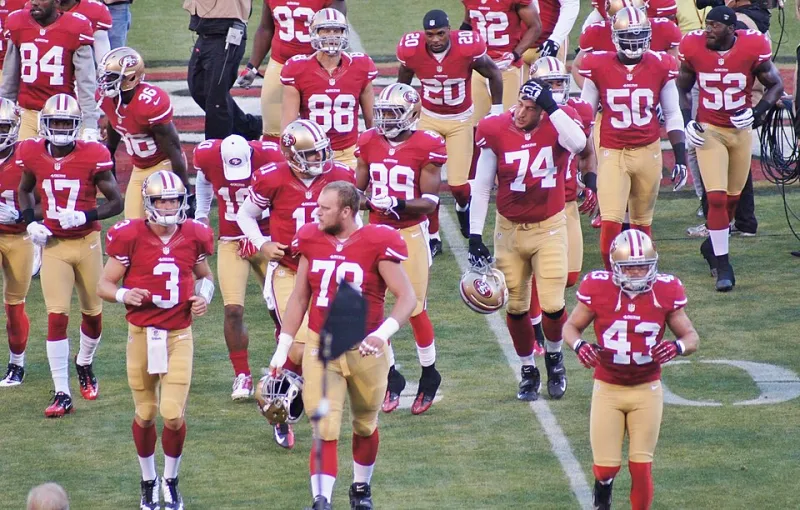
Photo: Steven Bowles, CC BY 2.0, via Wikimedia Commons
Turn One Steering was built on a simple idea: every play starts before the play. Nowhere is that more literal than in the two hours before kickoff, when a multimillion-dollar roster turns into a science experiment.
The Rise of the Warm-Up Economy
Twenty years ago, pregame prep meant some jumping jacks and a lap around the field. Today, Power Five programs employ dedicated performance staffs whose entire job is the window between the locker room door and the opening snap. We're talking movement specialists, breathwork coaches, and cognitive trainers who run reaction drills on tablets while players eat their pregame meal.
The money reflects the stakes. A top-tier college football program can drop seven figures annually on recovery and activation infrastructure alone — cryotherapy chambers, sensory-deprivation tanks, strobe-light reaction systems. The NFL isn't far behind, with several franchises building entire "readiness wings" into their facilities over the last five years.
Your Brain Is a Muscle Now
The strangest corner of this economy is neurotraining. Companies selling EEG headsets and vision-training programs have gone from fringe startups to sideline fixtures. The pitch is straightforward: if reaction time and decision-making can be sharpened even a few milliseconds, that's a competitive edge you can't get from another set of squats.
The science is still settling. Some studies show measurable gains in visual processing and attention from structured cognitive training; others suggest the benefits wash out quickly or don't transfer to actual game speed. But that hasn't slowed adoption. When a rival program buys the headset, the headset gets bought.
The Hyperbaric Arms Race
Then there's recovery — the part of pregame prep that actually starts 48 hours early. Hyperbaric oxygen chambers, once the domain of eccentric quarterbacks, now sit in facility basements across the SEC and Big Ten. Normatec boots hum in players' apartments. Sleep coaches review wearable data like offensive coordinators reviewing film.
The logic is sound even if some of the gadgets are questionable: a fresher nervous system reacts faster, and the opening quarter rewards fast reactions more than any other stretch of a game. Teams that score first win a striking majority of the time, and first scoring is heavily influenced by which roster looked sharper from the opening drive.
Who's Winning the Pre-Kickoff War?
Ask around and the same names keep coming up. Programs with new performance centers and aggressive hiring in sports science tend to cluster at the top of the polls — not because the pods and strobes win games by themselves, but because elite recruits notice the facilities, and elite recruits win games.
That's the real engine of the arms race. The warm-up economy is partly about performance and partly about recruiting theater. A recruit touring a facility with a recovery suite and a cognitive lab sees a program that takes preparation seriously. Whether the equipment moves the needle or not, the message does.
The First Whistle Was Won Earlier
Here's the uncomfortable takeaway: by the time the opening kick sails through the uprights, the competitive gap may already exist. The team that slept better, activated faster, and walked into the stadium with a calmer nervous system has been competing since Thursday.
Turn one of any game happens long before the ball is snapped. The programs that understand that are spending like it — and everyone else is slowly figuring out they have to catch up.