Ten Plays, One Masterpiece: How the Opening Script Quietly Decides Football Games

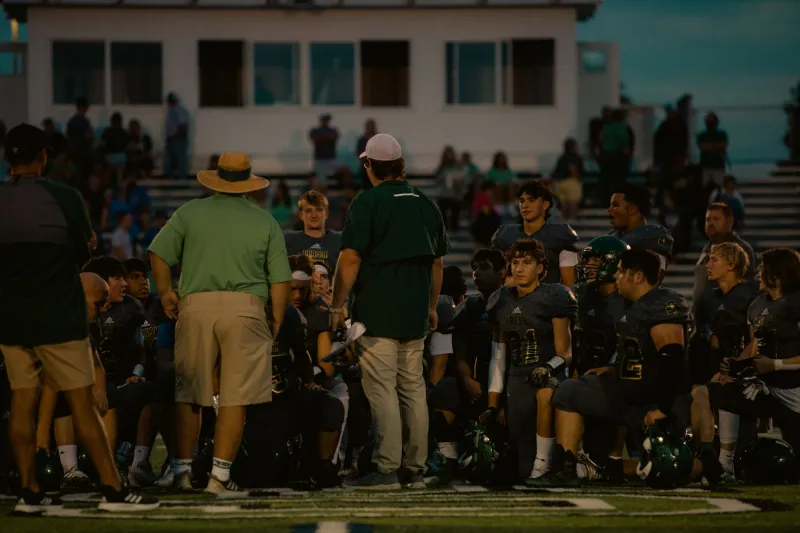
Photo: SRA Felicia Juenke, Public domain, via Wikimedia Commons
Every football game starts twice.
There's the start everyone sees — the kickoff, the crowd noise, the tunnel cameras. And then there's the start almost nobody notices: a laminated play sheet, written days earlier in a fluorescent-lit meeting room, that tells one offense exactly what its first ten snaps will be.
Coaches call it the script. Defensive coordinators call it something less polite. Either way, it might be the most underrated chess match in American sports.
The First Ten Plays Aren't Improvised
Offensive coordinators spend entire weeks building these opening sequences. They watch tape of the opponent's third-down tendencies, note which linebackers bite on play action, and identify the one coverage shell a defense falls back into when it's still shaking off the pregame jitters. Then they sequence a series of plays designed not just to move the ball, but to ask questions.
Will the safety rotate? Does that edge defender crash inside on zone reads? Can we test the cornerback across from our best receiver before his confidence sets in?
The script isn't a plan for ten points. It's a reconnaissance mission disguised as a drive. By play seven, a good coordinator knows more about the defense than the defense knows about itself.
The Masters of the Opening Drive
Some programs have turned the scripted start into an art form. Think about the offenses you associate with effortless first quarters — the ones that seem to stroll down the field before the opposing sideline has finished adjusting its headsets.
In the college ranks, the great spread offenses of the 2010s built their reputations on this. Oklahoma under Lincoln Riley regularly opened games with tempo sequences that looked like two-minute drill highlights — quick throws, tempo snaps, a defense on its heels before the first TV timeout. Baylor's Art Briles-era teams treated the opening quarter like a track meet, scripting chunk plays that dared opponents to adjust on the fly.
In the NFL, Andy Reid's opening drives have become the stuff of legend — misdirection, creative formations, and a tight end leaking out uncovered because somebody, somewhere, made a mistake in the first ninety seconds of the game. That's not luck. That's a week of homework cashing its first check.
What a Script Actually Reveals
Here's the fun part: you can learn a coordinator's entire philosophy from ten plays.
A script heavy on runs between the tackles says, we think we're tougher than you. A script that opens with a deep shot on play one says, we don't respect your corners. A script built around getting the ball to a freshman receiver early says, we're building this kid's confidence for November, and we'll spend a drive doing it.
Some of the most famous scripted drives in college football history were confidence operations. Hand the star running back the ball on four of the first six plays, even for modest gains, and you've told him — and the defense — who this game belongs to.
When the Script Backfires
Of course, the chess match cuts both ways. Defenses script too. A coordinator who suspects a scripted opening might load the box on early downs, show a coverage he never uses, or — the dirtiest trick in the book — deliberately run a look he plans to abandon by the second quarter, just to poison the opponent's film study.
That's the real chess: not play versus play, but plan versus plan. When an offense scripts ten plays and the defense scripts ten answers, the opening drive becomes a negotiation between two people who've never met, conducted entirely through eleven guys at a time.
And when a script gets blown up — a three-and-out, a strip sack on play four — you can sometimes see the whole game plan wobble. Coaches will tell you the hardest moment of any game is the drive after the script runs out and the play sheet goes blank.
The First Drive, the First Turn
At Turn One Steering, we spend a lot of time thinking about openings — the first corner, the first decision, the moment everything downstream gets decided. Football's opening drive is the same idea wearing shoulder pads.
The team that wins the first series doesn't always win the game. But it almost always wins the argument about what kind of game it's going to be. And in a sport where momentum is a currency, that's worth ten plays of anyone's week.